How to play padel: a beginner's guide
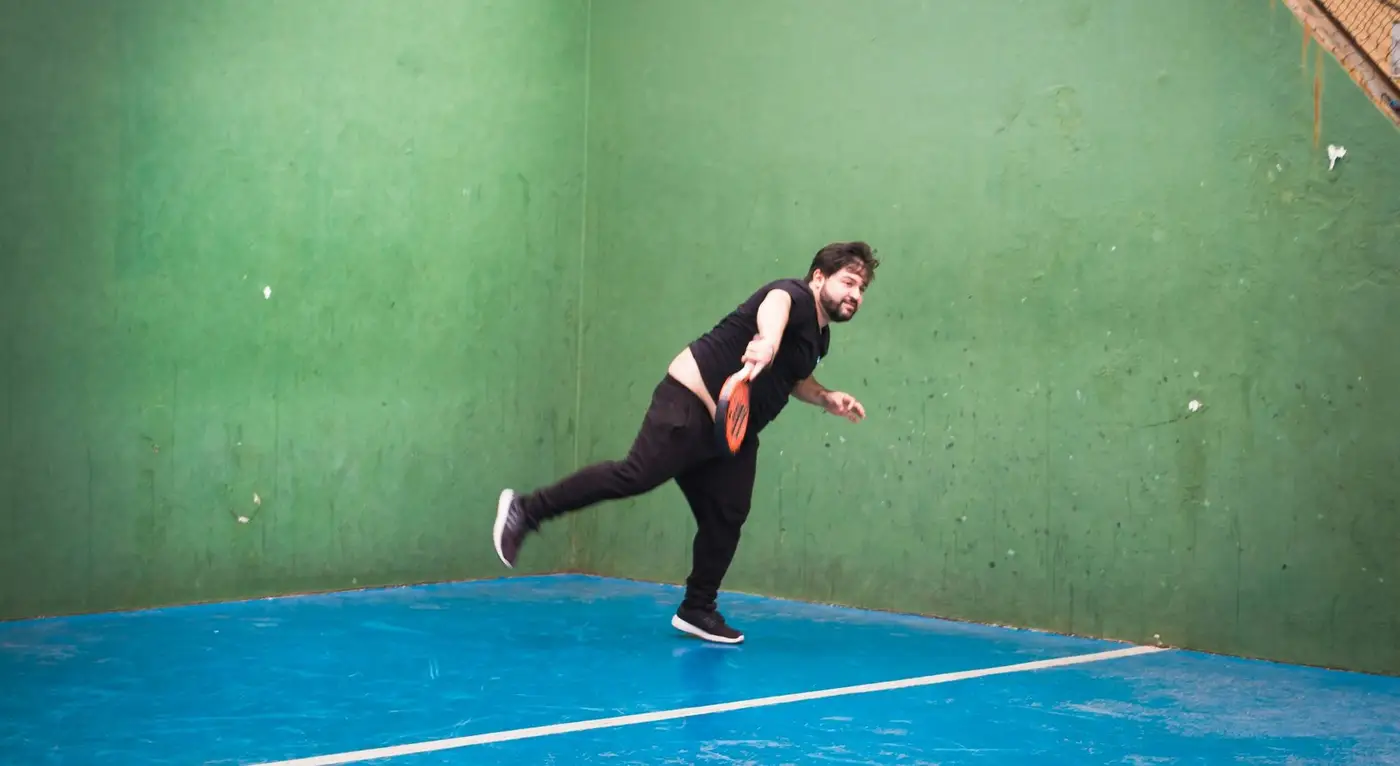
If you have a court booked and want to know how to play padel, this page is the first-session guide: what to bring, how to stand and swing, how to use the glass (the transparent back and side walls; the ball is in play off them), and how to move as a pair. For the origin story, the court, and a full scoring walkthrough, start with What is padel?. For official scoring options, including Star Point (the 2026 professional deuce system), see Padel rules and scoring. If you are coming from another racket sport, see Padel vs pickleball.
USA Padel (formerly USPA), the US national governing body, says most beginners can rally within 30 to 60 minutes. The aim of a first session is not a highlight-reel smash. It is to keep the ball in, move with your partner, and leave wanting another game.
How to get started in padel
The fastest way to start, according to USA Padel, is to book a beginner clinic or an open match, rent a padel racket (often called a paddle in the US), and wear court shoes. You do not need three friends already lined up. Many US clubs run intro clinics, “Padel 101” classes, and open play that group newcomers together.
What to bring on day one: court shoes with grip and lateral support — USA Padel and LTA Padel, Britain’s national governing body for the sport, both warn against running shoes, which are built mainly for forward movement — plus comfortable sports clothing (LTA Padel says there is no special dress code) and water. Most clubs supply or rent rackets and balls.
Put the wrist strap on before you step on court — it is obligatory in official play — and tell the coach or the other players that it is your first time. A one-hour group lesson, USA Padel notes, can save you weeks of picking up bad habits.
Ready position, and how to hold the racket
Federation coaching pages are more specific about ready position than about a single named beginner grip, so a first clinic is the best place to have a coach place your hand. What you can practice immediately is posture and preparation.
LTA Padel’s beginner skills guide tells new players to stay on their toes and take short side steps, so they can push off to either side. For volleys, LTA coaches want the racket already up, higher than the net, at about the height where you will make contact.
Between shots, hold the racket in front of you, and get it back early as soon as you see a forehand or backhand coming. Padel uses a short swing, so that preparation is an advantage. Wear the strap: USA Padel lists skipping it as a common mistake, because a slipping racket can fly into a partner or the glass.
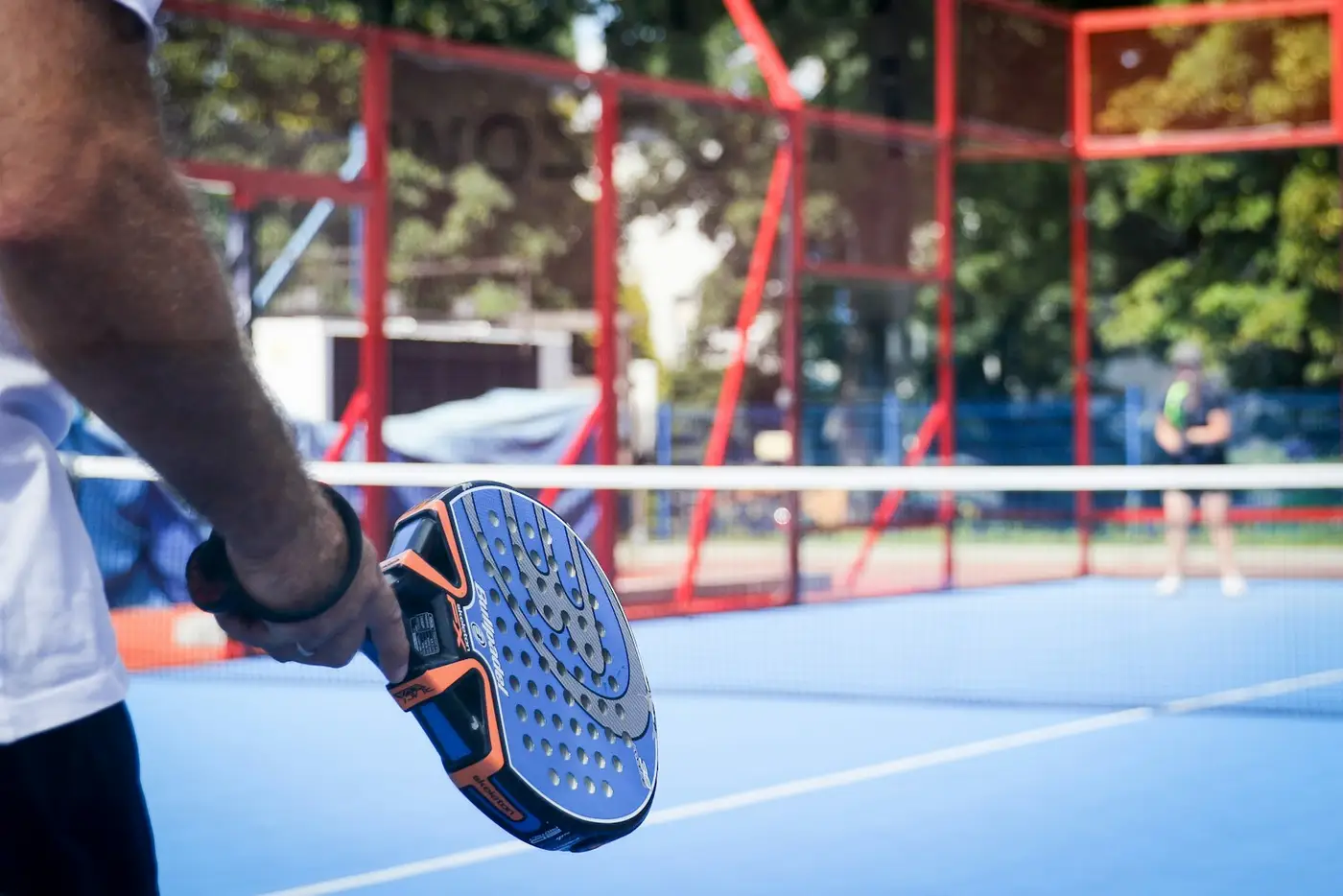
Photo by Tomasz Krawczyk on Unsplash
Basic shots for beginners
LTA Padel describes two basic team positions: both up at the net, or both toward the back defending. The lob is how you switch from one to the other. You do not need every named shot on day one. LTA Padel’s technique hub tells beginners to focus on three habits first: a consistent underarm serve, letting the ball come off the back wall instead of intercepting it early, and moving together with your partner.
Forehand and backhand
These are your rally shots from the back of the court, hit after the bounce, with or without the glass.
LTA expert coaches emphasize early preparation, a short backswing rather than a full tennis swing, pushing through the back of the ball with the racket face in line with your target, and making contact out in front of your body. On the forehand, they describe a sideways stance, feet about shoulder-width apart, weight shifting forward, and the non-dominant hand used for balance. On the backhand, turn the shoulders, step forward with the opposite foot, and strike slightly in front of you. As LTA Padel puts it, padel is more about accuracy and placement than power.
The volley
Most points in padel are won at the net, LTA coaches say, so the volley is the workhorse once you have come forward. It is a short, sharp push, not a full swing. Step in with the opposite foot and meet the ball out in front, with the racket head up. The same guide describes a block on a fast ball, a push to send an easier ball deep, and a later sliced fizz. Start with a compact block or push and aim for depth, often past the service line. You cannot volley the serve: the return must bounce first, under the FIP Rules of Padel.
The lob
LTA Women’s National Coach Libby Fletcher calls the lob the most important shot in padel. It pushes opponents off the net and gives you time to move forward.
Prepare early and sideways, with a more open racket face pointing toward the sky. The path is low to high: bend your legs, push up through the ball, and finish with the racket above your head. Aim for a ball that clears the players at the net and bounces just beyond the service line, before the back glass. Fletcher’s tip is to go cross-court, which gives you more margin. USA Padel puts the tactic simply: lob more than feels natural when both opponents are at the net.
The bandeja — and when to learn it
The bandeja (Spanish for “tray”) is a controlled, sliced overhead used to answer a lob and keep the net, not to blast a winner. LTA Padel calls it the most common overhead and “the antidote to the lob.”
LTA coaches say to prepare early, turn sideways, and hold the racket above your head as if you were holding a plate. Hit the ball at about eye height, “in line with your glasses.” The racket travels high to low and then across the body, which helps add underspin. Recover toward the net, level with your partner, without a lot of pace.
Learn it after the serve, the glass, and a reliable lob and volley feel familiar. A full smash, USA Padel notes, is for finishing a short, high ball; smashing every deep lob often hands the ball back off the glass.
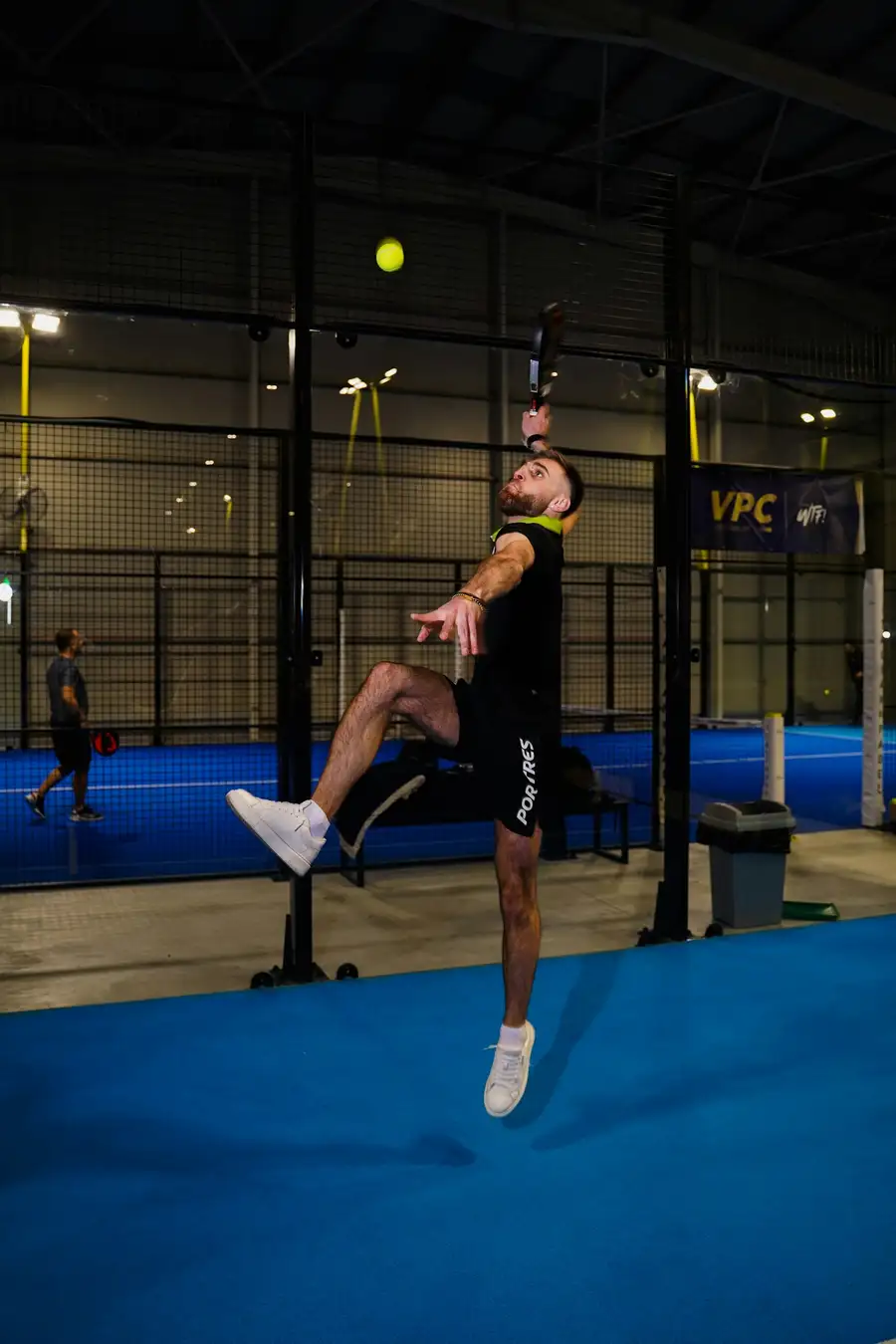
Photo by erjola qerimi on Unsplash
How to use the back glass
Playing off the glass is the biggest learning curve for most newcomers, LTA Padel’s tactics guide says. After a bounce off the back wall, you are often helping the ball onward in the direction it is already traveling.
The legality is covered in Padel rules and scoring. The ball must bounce on your side before it hits your walls, and you must play it before the second bounce. USA Padel also notes that you may hit the ball into your own glass so it rebounds over the net, provided it then lands on the other side.
LTA beginner tips say to give yourself space, prepare the racket early, read the incoming speed, and take pace off. A useful picture from LTA coaches is to stand facing the side wall, get the racket up, and wait for the ball to be in front of your leading foot. LTA groundstroke coaching treats the service line as a “decision line”: bounce before that line, try to play it without the glass; bounce after it, or a very fast ball, let the glass help.
Serve and return
Every point starts with a serve, and the server gets a second try if the first is a fault. Under the FIP Rules of Padel, it is underhand: the server must stand with one foot behind the service line, between the imaginary prolongation of the central line of serve and the sidewall, and remain there until the ball has been served; bounce the ball in the service box, strike it at or below waist height with at least one foot on the ground, and send it diagonally into the opponent’s service box. The lines count as in. A serve that then touches the metallic fence before the second bounce is a fault. There is no overhead serve.
LTA Padel tells beginners to treat the serve as a tactical shot that helps you get to the net, not as an attempt to hit an ace. Aim deep in the box; a serve into the side glass is useful at every level. After you serve, move forward. One LTA drill places a target in line with the second post of the side fence, about a racket’s length from the center line — a spot from which you can cover your side and the middle.
The return has one hard rule: you must let the serve bounce. After that, volleys are allowed. Keep the first return simple and in play. If both opponents have already come in, a deep lob is often better than a low drive you are not yet ready to control.
Basic doubles positioning and strategy
Official padel is a doubles game. The pair that controls the net usually controls the rally, which is why LTA Padel and USA Padel both tell beginners to think as a team.
USA Padel’s strategy basics are a good first checklist:
- Move as a pair. Advance and retreat together, as if you were connected by a rope about 3 meters long. When your partner is pulled wide, you cover the middle.
- Win the net, but do not crowd it. Stand about two to three steps back from the net so you can still handle lobs. At the back, stand about a step behind the service line and let the ball come to you.
- Hit through the middle. A ball down the center causes hesitation and often comes back weaker. LTA Padel adds that, especially among novices, most rallies are won and lost by mistakes, not winners.
- Lob more than feels natural when the other pair is at the net.
- Play with the glass, not against it. A ball off the back wall has lost pace. Step aside, let it rebound, then play it.
USA Padel also notes a common side choice: players usually keep the same side for a match. Right-handers with a strong forehand often take the right (“deuce”) side; the player with the stronger overhead often takes the left (“advantage”) side. Agree on left and right, then stay linked. LTA Padel wants partners calling “yours” or “mine” during the point, and building each other up rather than critiquing errors mid-game.
Court etiquette
USA Padel sets out a short etiquette list that will make you welcome at a US club: call “mine” or “yours” on balls down the middle; agree before the first serve whether you are playing advantage, golden point, or Star Point; wait for a point to finish before walking behind or across a court in use; shake hands or tap rackets at the net after the match; and make your own line calls on the serve fairly — if you are not sure, the point goes to your opponents. Since January 2026, every USA Padel–sanctioned tournament has used Star Point, according to USA Padel’s 22 October 2026 guide; social groups may still use another official option, explained in Padel rules and scoring. Help pick up balls.
Common beginner mistakes
USA Padel flags a habit that is easy to miss: hitting too hard, because a heavy ball often comes off the back glass as an easy shot. Other common mistakes — rushing the glass, standing too close to the net, ball-watching instead of moving with your partner, skipping the wrist strap, smashing every lob, and wearing running shoes — are covered in the sections above. LTA Padel would still put a consistent serve, the back wall, and moving as a pair first.
What gear to start with
Day-one kit, including court shoes and a rental racket, is covered in How to get started in padel. When you do buy a racket, both USA Padel and LTA Padel suggest a round, control-oriented, softer racket rather than a diamond-shaped power frame. USA Padel notes that most adult rackets weigh 350–390 grams and that diamond frames are less forgiving and harder on the arm. Tennis rackets and pickleball paddles are not a substitute: official padel rackets have a solid, perforated face, a maximum length of 45.5 centimeters, and an obligatory wrist cord. Use padel balls, not tennis balls.
How to find lessons and courts in the United States
Start with USA Padel’s Where to Play map, which lists Premier, Official, and Registered clubs. Then look for “Intro to Padel,” “Padel 101,” a welcome class, or beginner open play.
In October 2026, USA Padel launched a New Player Program Finder, powered by Padel Browser. At launch it listed nearly 80 clubs in 25 states, and many first sessions were free or low-cost, with equipment provided. If a listing looks stale, check the club’s own booking page.
A USA Padel membership is useful later for sanctioned tournaments and a national ranking. It is not required for a first lesson.
Frequently asked questions
Do I need any racket-sport experience to learn how to play padel?
No. LTA Padel notes that many players come from non-tennis backgrounds. The underhand serve, compact court, and walls help beginners start rallies quickly.
Can you play padel singles?
Official FIP padel is a doubles sport. USA Padel says singles is played on a narrower 20 m × 6 m court, but it is rare. Almost all play is 2 vs. 2.
Sources
All figures, rules claims, and technique cues in this article were checked against the following pages and documents, which were opened for this draft:
- International Padel Federation, Rules of Padel (review applicable 1 January 2026).
- USA Padel, What Is Padel? A Complete Guide to the Sport and How to Play It (22 October 2026).
- USA Padel, Where to Play.
- USA Padel, National Padel Month Kicks Off: Your Guide to October (30 September 2026).
- LTA Padel, How to get started playing padel as a beginner.
- LTA Padel, Six padel tips for beginners.
- LTA Padel, Padel match tactics for beginners.
- LTA Padel, Padel tips and techniques.
- LTA Padel, How to play padel forehands & backhands.
- LTA Padel, Volley tips and techniques.
- LTA Padel, Tips to play and improve padel lobs.
- LTA Padel, Essential tips on padel overheads, bandeja & the smash.
- LTA Padel, How to serve in padel.
- LTA Padel, Padel equipment guide.