Padel shoes vs tennis shoes
If you are heading to a first padel session, the piece of kit you actually need to bring is often a pair of court shoes. Most US clubs rent a padel racket (often called a paddle in the US). They rarely rent footwear, and the surface underfoot is not a tennis hard court.
This is a buying and fitting guide, not a wear test. We have not played or lab-tested these shoes. The advice below comes from federation and coaching pages — especially LTA Padel and USA Padel (formerly USPA) — and from official brand pages at ASICS, adidas, Babolat, and Bullpadel. Where those sources disagree, we quote them rather than invent a single rule. Any example prices were checked on the brand’s own site on Nov 10, 2026.
Once you have played a few times and want your own racket, use the beginner racket guide.
Why the court surface matters
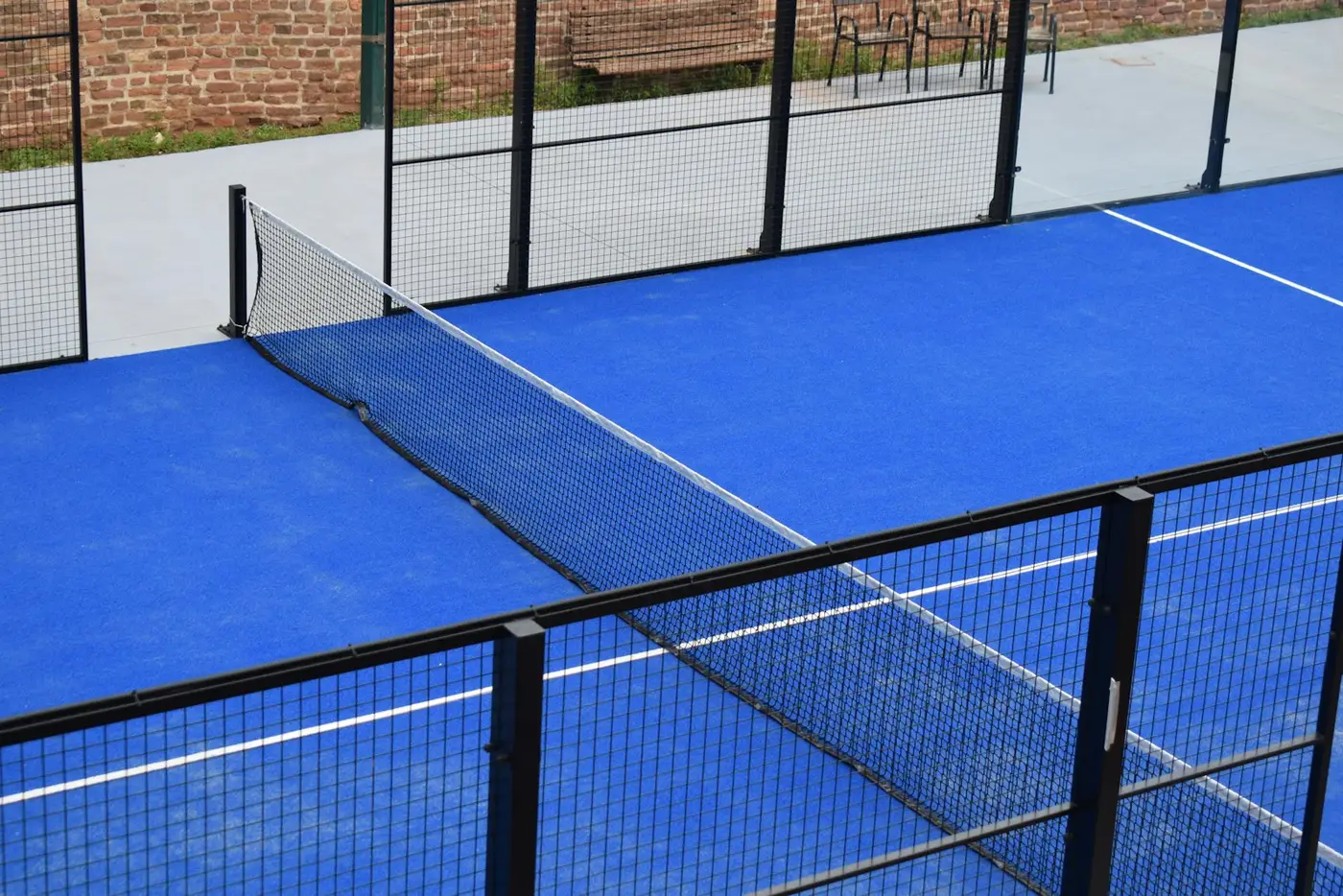
USA Padel describes a typical padel surface as “usually sand-filled artificial turf,” with concrete or carpet sometimes used instead. That loose sand over turf is the main reason padel footwear is not just a rebadged running shoe, and why clay-court tennis shoes come up so often as a stand-in.
The same USA Padel guide says padel involves “constant short sprints, stops, and lateral moves” on that turf. LTA Padel’s clothing and footwear guide, produced with its retail partner Pro:Direct, describes the movement as “side steps, sprints, split steps, and lunges,” and says the right shoes help you move efficiently while offering grip. Those are coaching and brand descriptions of the game, not a medical assessment of your joints.
Because many US clubs are indoor, it is easy to assume an “indoor shoe” is what you need. Indoor padel in the US is still often played on sand-filled turf. LTA Padel separately suggests non-marking, lightweight soles for indoor courts. That is useful if a club asks for non-marking rubber; it does not cancel the need for traction on sand.
What makes a padel shoe different
LTA Padel lists three things that make a padel shoe different:
- Lateral support, designed for fast, side-to-side movement
- A durable outsole, because “padel courts are textured — herringbone or mixed-pattern soles give the right traction”
- Cushioning and shock absorption, which the guide says helps during quick pivots and jumps
Brand pages fill in the same picture in their own language. Babolat, in an official 2021 padel-shoe article, says the sport involves “a lot of turning, stopping suddenly, moving around and jumping,” and that shoes should be well padded, “especially in the heel area,” with enough support. adidas describes its padel range around lateral stability, cushioning foams, and “multidirectional” traction patterns, sometimes with a pivot point for rotations. ASICS, in its padel-shoe guide (dated July 8, 2021), says a good outsole should grip when you sprint, allow you to turn easily, and — on artificial grass and clay — let you slide when you need to reach a ball.
None of that is a treatment recommendation. If your ankles, knees, or heels already hurt, talk to a clinician or a coach rather than shopping for a cure.
Herringbone, omni, and mixed outsoles
The outsole pattern is the most visible difference when you flip a padel shoe over.
Herringbone is the zigzag or “wavy” tread most often recommended for sandier turf. LTA Padel says to “go for herringbone soles” on clay or artificial turf courts. ASICS describes a herringbone pattern as a wavy design that “facilitates gliding across artificial turf” and is “especially recommended for courts which are sandier.” Bullpadel, on its Indiga 26I product page, calls a herringbone sole “specifically designed to optimise traction on court” and “ideal for courts with more sand.” Babolat puts it even more directly: herringbone “for the sand” and omni “for the artificial grass.”
Omni is a different pattern. ASICS describes it as dots on the sole that “provide great grip and are good for lateral sliding,” while also saying that pattern has “a shorter duration” (meaning it may wear faster). Babolat treats omni as the part of the sole that works on the artificial grass itself, with herringbone handling the sand.
Mixed or hybrid soles try to combine those ideas. LTA Padel groups “herringbone or mixed-pattern soles” together as the usual traction answer on textured padel courts. Babolat’s official copy for a padel-specific sole is “herringbone for the sand and omni for the artificial grass.” Bullpadel’s Indiga page lists both a “pure herringbone outsole” in the description and “hybrid” as a sole-type specification; we have not tried to resolve that labeling, only to report it.
adidas does not lean on the words herringbone or omni on the padel-shoe specification page we opened. It describes “multidirectional padel specific traction” on its Crazyquick models, with flex-crosses and a pivot point, and a “multidirectional court sport traction pattern” on the Courtquick, which it calls an all-level option.
If you are standing in a shop, look at the underside, not just the word “padel” on the box. A herringbone or mixed pattern is what LTA Padel, ASICS, Babolat, and Bullpadel keep pointing to for sandy turf.
How padel shoes compare with tennis shoes
LTA Padel’s padel vs tennis guide is the clearest official comparison. It says padel and tennis shoes “are designed for similar court movements, but the best sole depends on the playing surface.” Padel shoes, in that telling, are designed for “quick lateral movements, grip and stability on padel courts,” while “clay court tennis shoes are often the closest tennis alternative.” The same page, earlier, says “clay court tennis shoes are the most similar style of shoes that they use in padel,” and that trainers for both sports should have a sturdy outer sole and some cushioning.
USA Padel is in the same neighborhood: “Padel shoes typically have a herringbone or mixed sole that grips that surface and extra heel cushioning.” On tennis shoes, it says they “work in a pinch, but an outsole designed for clay or for padel grips turf better.”
Photo by John Fornander on Unsplash
The sources that do compare the sports keep coming back to a clay-style or padel-specific outsole.
LTA Padel also says that if you play regularly, “padel-specific footwear can provide additional lateral support and traction for the short sprints, turns and changes of direction used during a match.”
When tennis shoes are fine — and when they are not
This is the question most beginners actually ask, and the official sources do not all say the same thing.
LTA Padel’s beginner guide says “beginners can use suitable court trainers,” and that more advanced players may want “specific padel trainers that can better suit the playing surface.” It also says there is no special dress code, but “comfy footwear with reliable grip and lateral support is important for moving safely around the court.” On its main equipment guide, LTA Padel says some tennis equipment “can be used when starting out, such as trainers and sportswear,” while padel rackets and balls are sport-specific.
USA Padel is slightly tighter: tennis shoes work “in a pinch,” and a clay or padel outsole grips turf better.
ASICS is stricter still. Its padel-shoe guide says “choosing a specially designed pair of padel shoes is crucial — you can’t substitute them for other kinds of trainers,” and warns that other footwear may not let you sprint and slide on artificial grass and clay. That is brand advice, dated 2021, not a federation rule.
A practical reading that stays faithful to those pages: for a first session, a court shoe with a herringbone or mixed sole — including a clay-court tennis shoe — is the substitute LTA Padel and USA Padel accept. If you start playing regularly, those federations point you toward padel-specific shoes. Do not treat a running shoe as a court shoe. LTA Padel says to “avoid running shoes where possible, as they are mainly designed for forward movement.” USA Padel calls running shoes “a common beginner mistake,” saying they “lack lateral support and raise the risk of rolled ankles.”
What to look for
Use this as a checklist in a shop or on a product page, not as a promise about any one model:
- Outsole pattern. Prefer herringbone or a mixed herringbone-and-omni pattern for sand-filled turf, as LTA Padel, ASICS, and Babolat describe it. If a club requires non-marking soles indoors, confirm that too.
- Lateral support. Look for a shoe described for side-to-side court movement, not for straight-ahead running. LTA Padel, USA Padel, and the brand pages above all emphasize this.
- Cushioning, especially in the heel. Babolat calls out heel padding; USA Padel mentions “extra heel cushioning”; adidas and ASICS both sell padel models around midsole cushioning systems (Cloudfoam+, Lightstrike, Boost, or GEL™, in their own names).
- Fit and durability. ASICS says comfort and durability matter because of “extensive stretching, sliding and wear.” Many padel shoes add toe or sidewall protection; Bullpadel calls this kind of wrap a “Sole Shield” on the Indiga 26I, and adidas lists an “adituff toe guard” on its Crazyquick models. Those are product features, not a requirement list from a federation.
- Ask the club. If you can, ask whether the courts are sand-filled turf and whether non-marking soles are required. LTA Padel suggests talking to a specialist padel retailer if you want to buy padel-specific trainers.
Example padel shoes, with prices checked Nov 10, 2026
These are illustrations of current, officially listed US (or, where noted, official brand) models whose published descriptions match the guidance above. They are not rankings and not test winners.
- Babolat Premura 3 Men, listed on Babolat’s official US site at $102 (reduced from $170) on Nov 10, 2026. The product page describes a “100% padel-specific outsole” developed with Michelin, lateral reinforcements in the forefoot, and added EVA foam. Its official technical table lists a 10 mm drop and a standard fit. That page does not use the words herringbone or omni, and it does not list a numeric weight. Babolat’s Jet Ritma article, official copy from 2021 about a different, women’s model, describes a padel sole as herringbone for the sand and omni for the artificial grass; that wording is not a Premura 3 specification.
- ASICS GEL-RESOLUTION X PADEL, listed on ASICS US at $139.95 (original price $165.00) on Nov 10, 2026. The product page describes midsole features intended to help stability during lateral movement. For outsole pattern types, we have relied on ASICS’s padel-shoe guide, not on a herringbone label on that product page.
- adidas Crazyquick Lightstrike Padel (women’s), listed on adidas US at $98 (reduced from $130) on Nov 10, 2026. The page we opened did not carry a sold-out label. That US listing does not give a weight. adidas’s official UK specification page lists Crazyquick Lightstrike at 325.1 g, with Lightstrike foam, a stabilizing frame, and a multidirectional padel-specific traction pattern.
We did not find a clearly in-stock official US product page for a Bullpadel shoe on this pass, so no US Bullpadel price is listed. The Indiga 26I page on Bullpadel’s site is still a useful official description of a herringbone sole for sandier courts.
Prices change, sizes and widths vary, and a shoe that is right on paper can still fit poorly. If you can, try before you buy.
FAQ
Can I wear tennis shoes for padel?
Yes, especially to start, if they are court shoes rather than running shoes. LTA Padel says clay-court tennis shoes are often the closest tennis alternative. USA Padel says tennis shoes work in a pinch, but a clay or padel outsole grips turf better. If you play regularly, both point toward padel-specific shoes.
Can I wear running shoes?
The official beginner advice is no, or at least “avoid them where possible.” Running shoes are built mainly for forward movement and, USA Padel says, lack the lateral support padel asks for.
Do I need padel shoes for my first session?
You need court shoes with grip and lateral support. You do not necessarily need a padel-branded pair on day one. LTA Padel says beginners can use suitable court trainers. Bring those, rent a racket, and see how to play padel for the rest of a first-session plan.
What outsole should I buy for a sand-filled turf court?
Herringbone, or a mixed sole that includes herringbone for the sand. That is the consistent advice from LTA Padel, ASICS, Babolat, and Bullpadel.
Sources
- LTA Padel, Padel clothing and footwear
- LTA Padel, equipment guide
- LTA Padel, How to get started in padel
- LTA Padel, Padel vs tennis
- USA Padel, What is padel? A complete guide (22 Oct 2026)
- ASICS, The importance of padel shoes (8 July 2021)
- ASICS US, GEL-RESOLUTION X PADEL
- adidas, Padel shoes characteristics and specifications
- adidas US, Crazyquick Lightstrike Padel Shoes (women’s)
- Babolat, Jet Ritma official article (published 03/09/21)
- Babolat US, Premura 3 Men
- Bullpadel, Indiga 26I